
Interview
TEKEVER: civil and military drones, AI innovation and European sovereignty
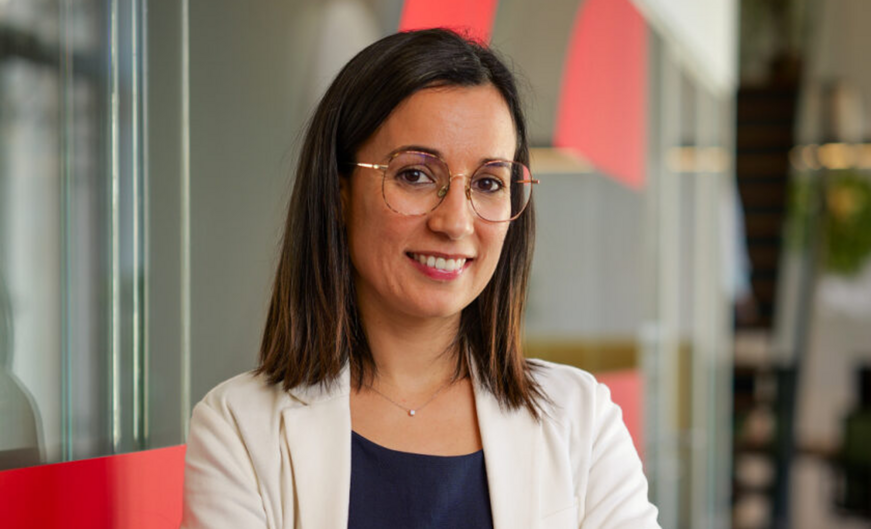
Nadia Maaref, General Manager of TEKEVER France and exhibitor at UAV Show, shares her insights in this interview.
Could you please introduce TEKEVER and your role in the development of both civil and military drone solutions?
TEKEVER is a leading pan-European provider of AI-driven autonomous systems for defence and security. We design and deliver fully integrated solutions that combine long-endurance drones, advanced data processing and space-based capabilities to strengthen situational awareness and mission effectiveness. Our approach is dual-use. In the civil sphere, our systems support missions such as maritime surveillance, border monitoring, search and rescue, and critical infrastructure protection. In defence, they provide persistent intelligence, surveillance and reconnaissance capabilities in demanding operational environments. Built with versatility in mind, our modular platforms adapt to client and partner needs and are designed for rapid deployment.
As General Manager of TEKEVER France, my role is to accelerate our growth in France, deepen our partnerships with the national ecosystem, and ensure our capabilities address both operational needs and strategic sovereignty ambitions.
Drones are experiencing rapid growth across many sectors. How does TEKEVER analyse the current needs of civil and defence markets?
We see strong momentum in both markets, driven by a common expectation: customers want systems that are reliable, rapidly deployable, and capable of delivering actionable information in real time.
In the civil sector, needs are growing around border surveillance, maritime operations, environmental monitoring and the protection of critical infrastructure. Operators are looking for solutions that can cover large areas, stay airborne for long periods and improve decision-making in time-sensitive situations.
The urgency is even greater in defence. The war in Ukraine has highlighted the value of persistent UAV capabilities that can operate in contested environments and support faster and more informed decision-making. At the same time, Europe is increasingly prioritising sovereignty, resilience, and control over critical technologies. TEKEVER's response is to deliver sovereign, vertically integrated systems that combine platforms, payloads, communications, and AI-driven data exploitation. This will strengthen our industrial presence in Europe, particularly in France.
The company is accelerating its expansion across Europe, executing rapidly in line with its DNA, with facilities in Portugal, the UK, and France (from Toulouse to a newly opened site in Cahors as part of a €100 million investment plan for the country).
What are the main technological and operational challenges today in developing versatile drones capable of meeting the needs of both markets?
The first challenge is resilience. Today's systems must be able to operate in far more complex environments, including degraded communications, GPS denial, jamming and spoofing. That makes robust autonomy, navigation and mission continuity absolutely essential.
The second challenge is adaptability. Customers want solutions that can evolve quickly, integrate different payloads and remain relevant as requirements change. Versatility is now a core expectation, not an added benefit.
The third challenge is speed. The market expects faster innovation cycles and high performance at the same time. Meeting those expectations requires strong in-house engineering, software-driven architecture and close industrial partnerships.
TEKEVER addresses these challenges by designing inherently resilient modular, interoperable systems, enabling seamless integration with third-party payloads developed by European partners and supporting operations in the most demanding scenarios.
Looking ahead 10 years, how do you envision the evolution of drones in civil and military uses, and which innovations could disrupt the sector?
Over the next decade, drones will become a core layer of security, resilience and decision support. In the civil domain, they will play an increasing role in maritime surveillance, environmental protection, emergency response and infrastructure monitoring. In defence, they will be central to persistent ISR, force protection and operations in contested environments. This will drive continuous technological evolution, requiring manufacturers to deliver agile systems capable of capturing and transmitting large volumes of actionable data in real time.
The biggest transformation will come from the convergence of autonomy, AI and multi-domain integration. AI will make it possible to process and prioritise data closer to the field, reducing latency and helping operators act faster. At the same time, drones will no longer operate as standalone assets. They will be part of wider ecosystems connecting air, land, sea and space capabilities. In this context, TEKEVER is also developing key radio frequency technologies for satellites and SAR capabilities.