
Exhibitor voices
Interview with Xavier Leblan, Head of Development at EMITECH-GNSS
Exhibitor voicesXavier Leblan of EMITECH-GNSS: mastering navigation, a major challenge for the drone industry. |
What are your expectations for UAV SHOW?
For EMITECH-GNSS, UAV SHOW is an opportunity to meet key players in the drone industry—including manufacturers, equipment suppliers and institutional stakeholders—and to discuss their requirements for testing, qualification and demonstrating compliance. In particular, we aim to showcase our expertise in GNSS metrology for drones and develop new partnerships focused on the assessment of navigation performance, the safety and reliability of positioning functions, and resilience to GNSS interference and threats.
What new products, services or solutions will you be showcasing?
EMITECH-GNSS will be highlighting its testing solutions designed to support manufacturers in the assessment and certification of drone navigation functions, particularly within the framework of the EN 4709 standard.
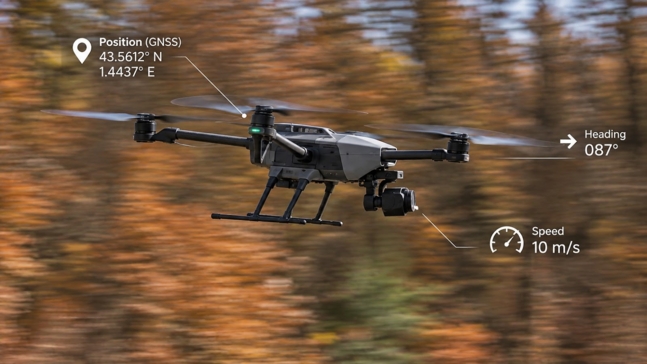
Our expertise covers the definition of test scenarios and flight test campaigns, drone instrumentation, the implementation of reference trajectories, as well as the measurement and analysis of position, velocity and trajectory performance. Some services can be performed under COFRAC accreditation, within the scope of our accreditation. We will also showcase our new capabilities for assessing navigation resilience in degraded or contested GNSS environments, particularly in the presence of electromagnetic/RF interference, jamming, spoofing and meaconing.
In your view, what are the current and future challenges facing the drone industry?
One of the industry's main challenges is enabling increasingly autonomous and complex drone operations while providing objective guarantees of safety, performance and compliance. Navigation is a key issue in this respect. Positioning performance must be measurable under conditions that are representative of real-world operations, as well as when the operating environment is degraded or GNSS signals are disrupted. The development of BVLOS operations, the integration of drones into shared airspace, compliance with UAS geographical zones, and growing risks associated with jamming and spoofing all reinforce the need for reproducible testing methods, reliable measurement references and traceable results. The challenge is therefore to move from claimed performance to performance that is objectively measured and demonstrated.